A Single Man by Christopher Isherwood
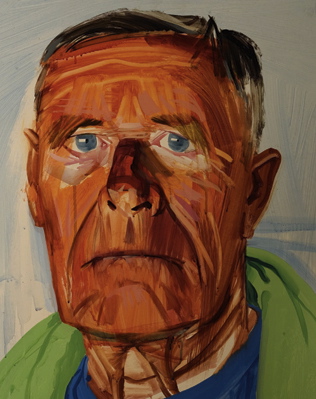
Like its elegantly succinct title, almost every aspect of A Single Man suggests a modest and minor work: its brevity (less than 200 pages), its scope (a single day), and its circumscribed geographical canvas (a few square miles). Yet this book, Christopher Isherwood’s favorite among his many novels, is a masterpiece of potent distillation, and disturbing in the best possible way.
A seemingly simple portrait of Isherwood’s alter-ego, George Falconer, A Single Man is set in Los Angeles in December of 1962, and was first published in 1964. In the early years of the 1960s, American society was still languishing in the self-satisfied and somnolent world of the 1950s. Overt homosexuality, though still “unspeakable” was treated with “the new tolerance, the technique of annihilation by blandness.” By positioning his unquestionably and unquestioning homosexual character (a rarity in literature from this pre-Stonewall period) in the very epicenter of the heterosexual wonderland of Southern California, where World War Two vets and their fertile wives swill cocktails and produce children “litter after litter after litter,” Isherwood creates a seething, covert tension that simmers between every sentence of this book.
Except for the absence of children, George Falconer’s domestic life is not so different from his heterosexual neighbors: he lives with Jim, his partner of 14 years, in a domestic contentedness. It is made absolutely clear that Jim is George’s husband, his partner, his spouse: “Jim wasn’t a substitute for anything.” They live in a similar house on the same street as their deeply and proudly conventional neighbors, but their house is separated from the others by a creek and can only be accessed by crossing a rickety bridge that has (symbolically?) “begun to sag a little.” They live their unspeakable lives surrounded by, but disconnected, from the outside world. George and Jim are blindly perceived as “good friends” or “roommates.” They are tolerated, but they are also feared, for their neighbors know that “the unspeakable…insists, despite all their shushing, on speaking its name.” And of course it does: at the end of the decade, on June 28, 1969, the Stonewall Riots in New York City will mark the beginning of the modern fight for gay and lesbian rights in the United States.
As long as both men are alive, all is (relatively) well. They can love one another, cohabitate, and because they do not reveal their authentic selves and true relationship, live their unspeakable lives. But Jim’s accidental death, which occurs while he is visiting his family half a continent away, is a double-edged sword that mortally wounds George. He cannot properly mourn, for how can one mourn a lover and a relationship that the world has refused to acknowledge? George has privately lost everything, and publically nothing: merely a roommate, a friend. This is the devastating tragedy that is at the very center of A Single Man: the pathos and impossibility of George Falconer trying to come to terms with an absence that was, in some fundamental sense, never a presence. No document I know of speaks more eloquently and convincingly for the need for gay marriage than this extraordinary and beautiful novel.
[This entry was originally written for, and published in, Adelphiana: 1963-2013, a book commemorating the 50th anniversary of Adelphi Edizioni, my Italian publisher.]
Leave a Reply