A Man’s Blessing by Leonardo Sciasca (Harper & Row, 1968)
An odd, short novel about a murder in Sicily sometime in the 1960s. Two men, a pharmacist and a doctor, are killed while out hunting in the countryside; the pharmacist had recently received a threatening anonymous letter that turns out to be a fake, a decoy. The professor, a decent, single man, takes an interest in solving the crime and his investigation, which leads him to the murderer (the doctor’s wife’s lover) also leads to his murder. The slight story is told with elegance and economy but gets a bit bogged down with Italian politics. I liked the character of the professor, and enjoyed reading the book.
An interesting but frustrating book: a novelization of the life of Ella Lynch, a beautiful Irish woman who meets the future dictator of Paraguay in Paris and follows him to South America, where she bears him five sons and stands by him in the face of both great splendor and hardship. Ella is smart, independent, and brave, and it is hard to understand what keeps her so devoted to the loutish, belligerent, cruel, and violent Franco. The fact that the narrative is comprised of many different elements (letters, journal entries, governmental records, etc.) and is told from many different points of view doesn’t help the book present a coherent Ella. Tuck seems to be going for a sort of intimate epic, and it doesn’t really work. Much of the book deals with the pointless and hopeless war Franco wages with Brazil and Argentina, the logistics and details of which never become very clear or engaging. But there are many beautifully rendered scenes and characters, and many indelible moments and images. Tuck is a good, smart writer, but I think this interesting book falls somewhat short.
Wavemaker II by Mary Beth Hughes (Atlantic Monthly Press, 2002)
Another book I don’t know why I’ve never read, given that I’ve owned it for years and know and like MBH. Perhaps the Roy Cohn business put me off? Unlikely. This was a scintillating read, refreshing and bracing, like a perfect Gin and Tonic at the end of a long hot summer day. Delicious and satisfying. The story, set in the early 60s, is about a fractured family (cancer, imprisonment, adolescence) who is tended to and salvaged by Roy Cohn. Mary-Beth Hughes’s writing is elegant, sly, brisk, and never panders or caters to the reader. In this way the book seems to exist without a reader; it feels carved rather than written. Everything on the page seems solid and true, and is surrounded by what has been taken away, excised. Wavemaker II often shifts focus, moving from place to place and from character to character, yet always retains its brilliant sharp focus. I enjoyed and admired the book, and look forward to reading Mary-Beth Hughes’s new novel, The Loved Ones, which was published in June.
State of Grace by Joy Williams (Scribner Signature Editions, 1986)
It seems odd that I never read this book before — I’ve had this copy for years, and of course always been aware of how admired Joy Williams is among writers, but something kept me away. Perhaps I started it once and was put-off by its sometimes difficult eccentricity, but this time I fell right into it and read eagerly. Williams’ prose is incandescent and (sometimes) willfully quirky, and reading this book is an almost tactile experience: it seems considerably more alive and textured and surprising than most novels. Part of that effect is a result of deliberate oddity: everything about it — the narrator (a rather stunted college girl who’s dropped out to pursue an affair with Grady, a cryptic, sexy golden boy), the setting (Florida [the Everglades?]), and the form, which moves unchronologically back and forth through time in a way that flattens and conflates the past and present — is odd. Although some of these choices seemed made to heighten and enhance the book’s Gothic weirdness, Williams is brilliant enough to make it all work, although unlike Flannery O’Connor, whose fiction this books often resembles, there seems something deliberate and chosen, rather than inevitable, about it all. Nevertheless, it is a vivid, original, smart, and funny book that delighted me.
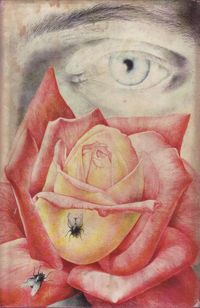
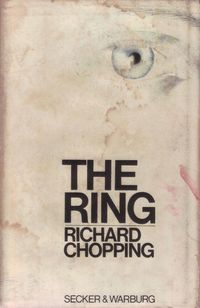
I came across this book on my bookshelf while packing up for my move, and didn’t remember when or how I happened to come by it. Perhaps it was mentioned in one of the book I have about lost gay novels? In any case, it looked interesting, so I decided to read it. The edition I read was a Bantam mass market paperback published in 1970. It was originally published in the U.K. by Secker & Warburg in 1967 (pictured; cover design by the author).
This is the sad story of Boyde, an upper-class, young (30s?) British man who lives with his decaying mother in a decaying house in London. Boyde has a bachelor flat in the basement; his mother, who rarely leaves her bed which is strewn with jewels given to her by her many past glamorous lovers, lives, with her devoted servant, on the upper floors. Boyde is homosexual and cruises a louche gay piano bar and faux-Roman bath filled with men purportedly seeking to lose weight but who are mostly looking for something else entirely. He falls for a straight(ish) masseur named Tex, and simultaneously pursues a catastrophic romance with a beautiful young lad with a snake tattooed around his entire body. Boyde also has a gay friend who is even more pathetic and sex-starved then he, and their affection for one another is laced with mutual disdain.
The story of Boyde’s demise (he ends up dead of course, killed in the baths when he comes on to the wrong straight man), is juxtaposed with two alternative narratives: one chronicles, rather disgustingly, the mating habits of toads and frogs, taken from a book on the subject that Boyde reads in bed; the other deals with a quartet of secondary characters who are all unpleasant and venal, including a Mr. Crypt, the cadaverous butler in the neighboring house. This all amounts to a rather unpleasant stew about gay life in England in the 1960s, when homosexuality was both dark and (literally, in this case) dirty and dangerous.
Chopping’s writing, especially in its description of the natural world, is ambitious and often accomplished, and the character of Boyde, with his inability to imagine, let alone pursue, a life of dignity, is finally rather poignant.
Spaces of the Dark by Nicholas Mosley (Rupert Hart-Davis, 1951)
I found this book by chance on my bookshelf — I must have bought it because many years ago I had enjoyed Mosley’s novel Accident, which I read because I liked the Joseph Losey/Harold Pinter/Dirk Bogard film version made in 1967. Spaces of the Dark (the terrible title comes from an epigraph by T. S. Eliot) is Mosley’s first book, and a very interesting novel both in terms of style and craft.
Our hero, Paul, returns to England after being injured toward the end of WWII in Italy. In a haunting battle scene which is vividly rendered in flashback, we see Paul shoot and kill his best friend and fellow soldier John. John was about to treasonably urge the soldiers under his command to retreat against orders from HQ. Of course Paul is tortured and plagued by this patriotic but murderous action, and feels unable to return to civilian life while harboring this terrible secret.
Back in London, he visits John’s family and falls in love with his conventional, sensible, but emotionally needy and manipulative sister Margaret, who once she gets her hands on Paul refuses to let go. He also visits and falls in love with Sarah, an artistic Bohemian girl with whom John had had a passionate and profound one-night affair while home on leave a year or two earlier. He disastrously pursues both of these relationships (with John’s sister and John’s lover) simultaneously and the resulting triangle resolves in tragedy: Paul is run and over and killed by a lorry while directing traffic away from Margaret who had been hit by a car and lies injured in the road. (It was a very foggy day.)
The novel is set in London in 1950, which is the same time and place as my most recent novel, Coral Glynn, and it was interesting to read a book that corresponds in place and time so exactly with mine. And I was also interested in the many structural and technical liberties Mosley took: the POV shifts frequently and often jarringly from first-person omniscient to first-person singular. The writing seems liberated to serve the book in the best way at any particular moment, so things like POV and style and constantly shifting. It is clear that Mosley was interested in finding new ways to observe and relate human action and behavior, and in that way this book is most certainly a forerunner to Mosley’s later experimental novels, many of which have been republished by Dalkey Archive Press. The book feels very unrestrained from conventional narrative techniques and this freedom gives it a nice, unsettled energy, which somewhat leavens the stolid familiarity of its conventional plot. I also admired Mosely’s willingness to pronounce oracularly on life and love, although sometimes these pithy observations were unnaturally forced into the mouths of the characters.
Those Who Leave and Those Who Stay by Elena Ferrante (Europa, 2013)
The third of Ferrante’s Neapolitan novels, and every bit as engaging and interesting as the first two. The action is perhaps a bit more melodramatic, but I continued to be convinced and entranced by Ferrante’s account of these two women and their singular lives.
Preparation for the Next Life by Atticus Lish (Tyrant Books, 2014)
I loved this book: I loved the writing, the characters, the plot. A romance between two somehow heroic young people: a damaged Iraq War veteran and a strong, brave Chinese immigrant. I felt this book paid almost eerily informed attention to people under- (or non-) represented in contemporary literature, and presented them with honesty, dignity, and brilliant clarity. A truly amazing book, one of the best contemporary novels I have read in a long time — perhaps ever.
The Story of a New Name by Elena Ferrante (Europa, 2012)
The second volume in this author’s Neapolitan quartet is written with the same drive and intelligence of the first, and is even more rewarding and engrossing, only because the lives of its two heroines, who are now young women, are that much more complex and crucial.
We Are Not Ourselves by Matthew Thomas (Simon and Schuster, 2014)
We Are Not Ourselves is the story of Eileen Leary, a second-generation Irish-American. Both her parents are alcoholics,and she grows up fast and smart in Queens in the 40s and 50s when she is forced to parent both her mother and father as well as herself. She marries Edmund, a sweet unambitious academic who teaches and does (chemical) research at a public university in the Bronx. (To Eileen’s chagrin, he turns down a job at NYU because he feels he is more needed in the Bronx.) Eileen and Ed have a son, Connor, and move into and eventually buy a 3-family home in Jackson Heights. Ed begins acting strangely and is finally diagnosed with having early onset Alzheimer’s, from which he dies several excrutitating years later.
This book is sincere and old-fashioned and Thomas is good at capturing the routines of daily life and the relationships between parents and children, and spouses. The book is carefully — almost painstakingly — written and is vivid and engaging in its sensitive depiction of domestic life. Yet it failed to make much of an impact on me, perhaps because Eileen is not a particularly compelling or sympathetic character, and the book never rises above her somewhat pedestrian level. Its lack of effect might also be a result of its span and length: 50 years, 600 pages. Neither the story nor the characters can sustain that much time and that many pages.